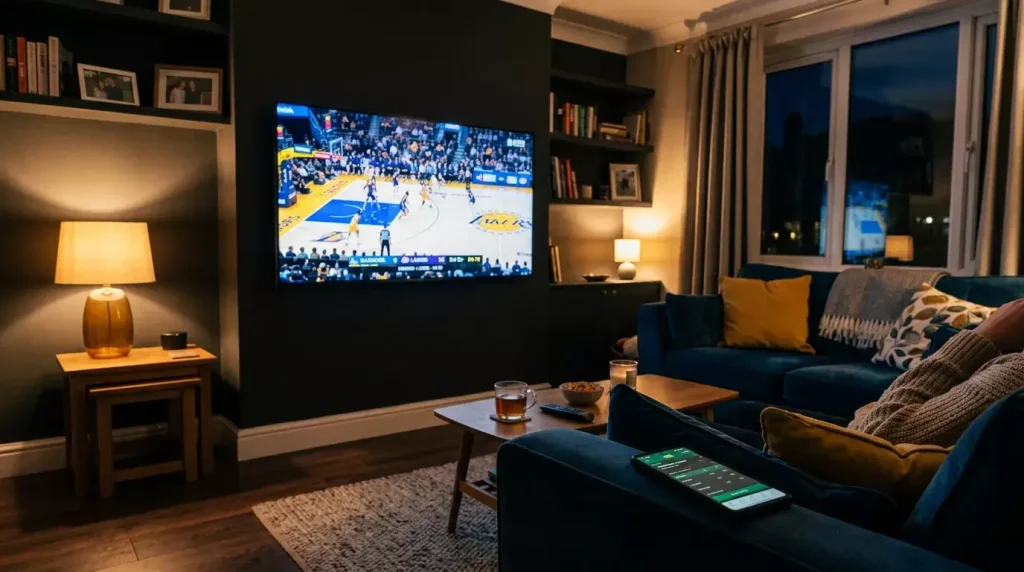
NBA Three-Pointer Betting: Props, Trends, and the Metrics Behind the Arc
 Available in US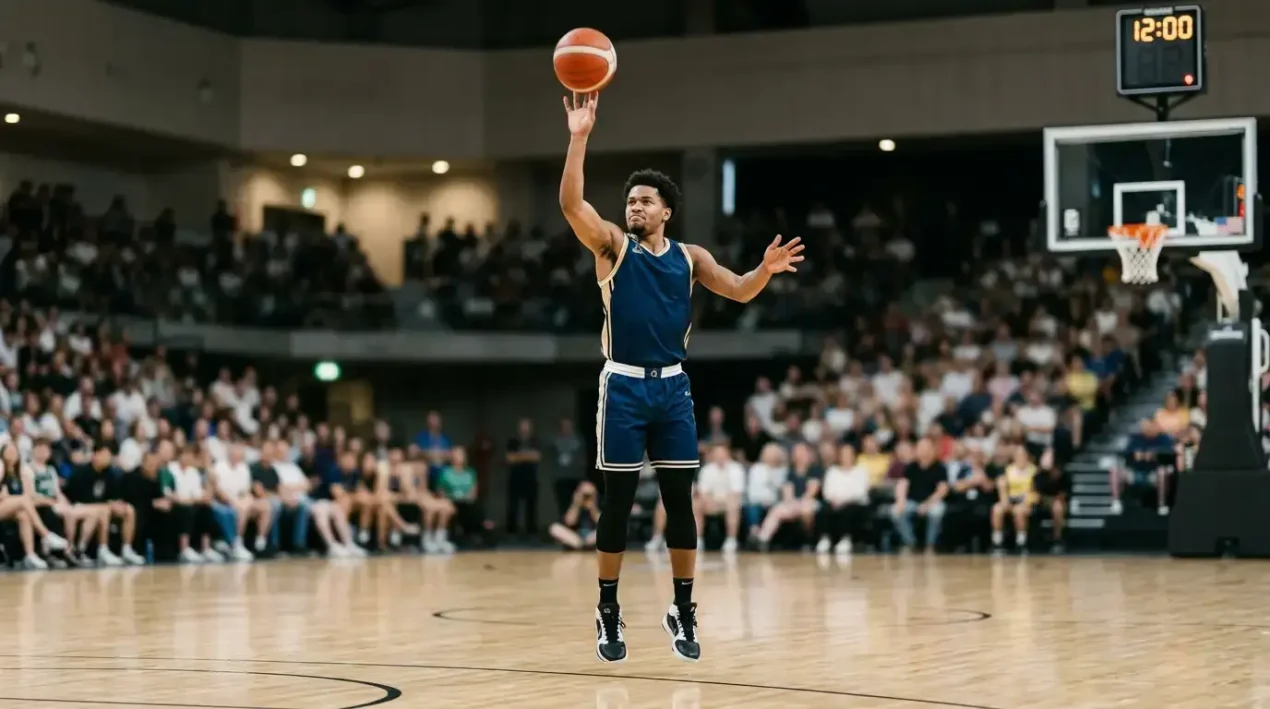
Three-pointer betting sits in a sweet spot for analytical bettors. The shots are high-frequency enough to generate reliable data — most NBA starters attempt between five and twelve threes per game — but volatile enough that bookmakers sometimes misprice the lines. The basketball betting market is valued at $8.7 billion globally with projections reaching $18.4 billion by 2033, and three-point props occupy a growing share of that market as the NBA’s shooting revolution pushes more volume beyond the arc every season. If you have not looked at three-pointer props seriously, you are leaving one of the most data-friendly markets on the table.
Combine three-pointer bets with NBA rebounds and assists props.
Variance in Three-Point Shooting: What the Numbers Say
The first thing to understand about three-point shooting is that variance is not your enemy — it is your edge. A player who averages 2.5 made threes per game does not hit exactly 2.5 every night. He might go 1-for-8 one game and 5-for-9 the next. That variance scares casual bettors away from three-point props, but it is precisely what creates mispriced lines.
High-volume shooters — players attempting eight or more threes per game — tend to produce more stable results over a five-game rolling average than low-volume shooters attempting three or four. The distribution is tighter, which means the bookmaker’s line is harder to beat. Where the opportunity lives is in the middle tier: players attempting five to seven threes per game whose recent form has diverged from their season average. A player shooting 41% from three over the season but 31% over his last five games is likely due for regression toward his mean. If the bookmaker has adjusted the line downward based on that cold stretch, you are getting value on the over.
The reverse applies equally. A player on a hot streak — 45% over five games against a season average of 35% — will see his line inflated. Casual bettors pile on the over because the recent results look impressive, but the math says the regression is coming. Betting the under in those spots requires patience and conviction, but the data supports it.
One more variable worth tracking: game script. In blowouts, starters sit early in the fourth quarter, which limits their three-point opportunities. Close games extend minutes and often increase late-game three-point attempts as trailing teams shoot more aggressively from beyond the arc to close gaps. If you expect a competitive game based on the spread, that tips the scales toward higher three-point volume for both teams — a useful filter when deciding between the over and under on a specific player’s makes line.
Opponent Perimeter Defence and 3PM Props
A shooter does not operate in a vacuum. The opponent’s perimeter defence is the single most important contextual variable for three-point props, and it is the one that most bettors underweight. Defensive schemes vary enormously across the NBA: some teams switch aggressively on screens, closing out hard on shooters and daring opponents to drive. Others drop into zone or pack the paint, conceding open looks from beyond the arc.
The metric to track is opponent three-point attempt rate — the percentage of an opponent’s shot attempts that come from three. A defence that ranks in the bottom five for opponent three-point attempt rate is essentially inviting perimeter shooting, which inflates the volume available to every shooter on the opposing team. More attempts mean more opportunities to hit, even if the defence contests some of those looks.
Matchup-specific analysis goes deeper. If a team’s primary wing defender is out injured, the replacement is often a step slower on closeouts. That marginal difference — a half-second of extra space on the catch — can shift a shooter’s expected three-point percentage by two to three points. The bookmaker’s line reflects the team-level defensive data but rarely adjusts for individual defensive absences in real time. That gap is where prop bettors find edges. For a broader look at how prop markets work across all stat categories, the prop betting guide covers the fundamentals.
Attempts vs Makes: Where the Value Lives
Some UK bookmakers have started offering three-point attempt props alongside the traditional made-threes lines. This is a subtle but significant development. Attempt props strip out the shooting variance entirely: you are betting on whether a player will take a certain number of threes, not whether they will hit them. For high-volume shooters, attempt lines tend to be more predictable because shot volume is driven by role and game plan rather than luck.
Consider a player whose coach has explicitly increased his three-point role over the past month. His attempts have climbed from six to nine per game, but his makes have stayed at roughly 2.5 because his shooting percentage has dipped during the adjustment period. The makes line might sit at 2.5, which looks reasonable based on his output. But the attempts line at 7.5 could be underpriced because the market is anchoring to his older, lower-volume role rather than his current usage.
The limitation is availability. Not all UK sportsbooks offer attempt props for NBA games, and when they do, the lines tend to appear only for marquee matchups. But when you find them, they represent one of the cleanest edges in the three-point market because they remove the largest source of noise — whether the ball goes in.
A practical approach is to monitor both lines when available. If the makes line and the attempts line point in the same direction — for example, a high-volume shooter facing a porous perimeter defence, with both the over on attempts and over on makes looking attractive — that convergence signals a higher-confidence bet. When they diverge — high attempt probability but uncertain makes — the attempts prop is the safer play because it relies on role and opportunity rather than shot-making on a given night.
Explore betting on nba players for shooting-based props.
Three-Pointer Betting FAQ
Why are NBA three-pointer props popular with analytical bettors?
Three-pointer props combine high shot volume with measurable variance, making them ideal for data-driven approaches. AI models have demonstrated a 63.2% win rate on three-point-made predictions, the second-highest accuracy among all prop categories. The abundance of tracking data — catch-and-shoot percentages, pull-up three rates, contested vs open looks — gives analytical bettors more inputs to model than most other prop types.
How does a player’s home vs away split affect three-pointer betting?
Home and away splits for three-point shooting tend to be modest at the individual player level — the difference is typically less than one percentage point for most starters over a full season. However, the split becomes more meaningful for role players who thrive on crowd energy or whose minutes fluctuate. If a bench shooter plays five more minutes at home than on the road, his three-point attempts and makes will naturally increase at home, making the split relevant for props even if his shooting percentage does not change significantly.
This material was created by the CourtEdge team.
Related posts

NBA Betting Glossary for UK Punters: Every Term You Need to Know
British Basketball League Betting in the UK: Markets, Coverage, and Differences from NBA