
Betting on NBA London Games: What Makes UK-Hosted Matchups Different
 Available in US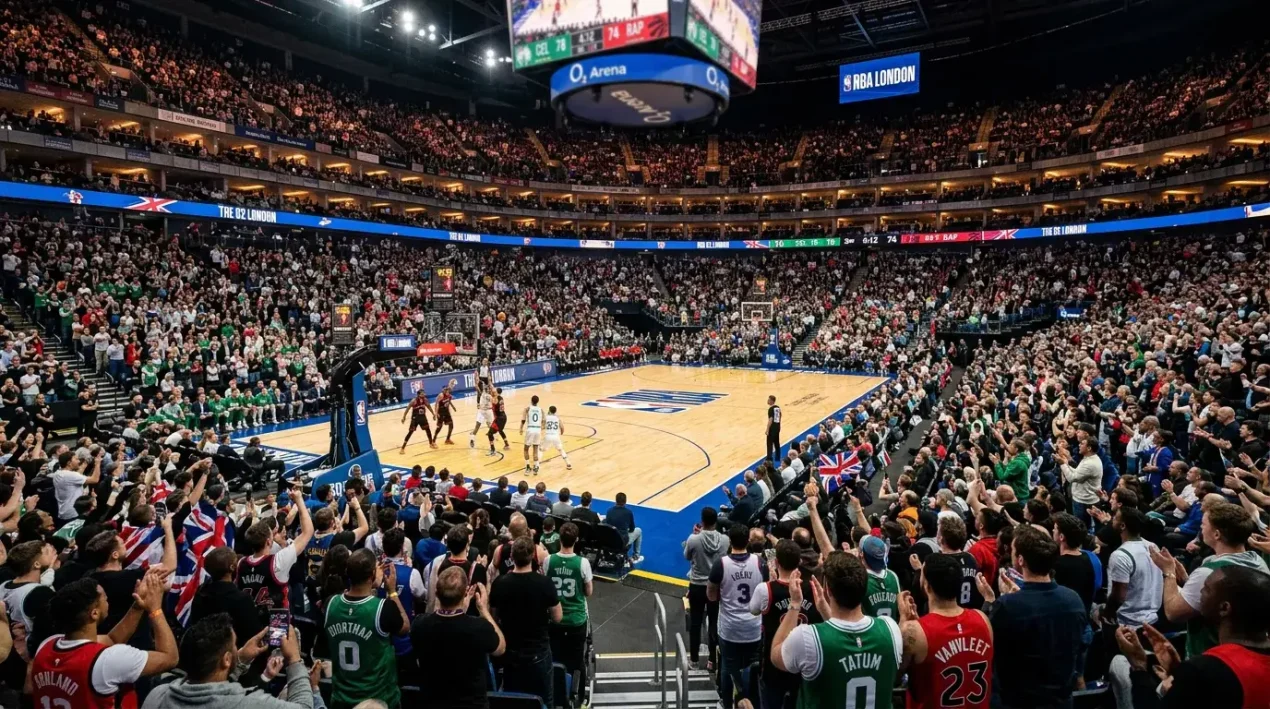
NBA London games have become a fixture, and the league’s investment in the UK is accelerating. The UK government has committed £400 million to community sport facilities over four years, with £5 million in the first year earmarked for basketball — matched by a further £5 million from the NBA through 2028. Sir Keir Starmer put it directly: basketball is booming in Britain, and this investment will help open up the game to thousands more people across the country. For bettors, the growth of the NBA’s UK presence means more London games, more market attention, and a growing need to understand what makes these matchups different from a standard Wednesday night in Sacramento.
Learn how to watch the NBA in the UK and bet along.
Neutral Court Dynamics: No Home-Court Advantage
The most obvious difference in an NBA London game is that neither team has home-court advantage. The O2 Arena is neutral ground — no home crowd, no familiar arena, no pre-game routine in their own practice facility. In regular-season NBA games, the home team wins roughly 57–60% of the time across a full season. In international games played on neutral courts, that baseline disappears.
For spread bettors, this matters immediately. The standard home-court adjustment that bookmakers build into NBA lines — typically worth around three points — is removed or significantly reduced for London games. If you are accustomed to factoring home-court into your handicapping, London games require recalibration. The team that would be the “home” team on the schedule does not receive the usual boost, which can make favourites vulnerable if the market has not fully stripped out the home advantage.
The crowd dynamic is different too. NBA London crowds are enthusiastic but less aligned to either team than a typical home crowd. They cheer for highlights, dunk attempts, and impressive plays regardless of which team produces them. That neutral energy removes the “momentum swings” that home crowds can generate — the roar after a run, the pressure on opposing free-throw shooters. Whether this affects outcomes in a measurable way is debatable, but it removes one variable that usually tilts in the home team’s favour.
Historical against-the-spread performance in international NBA games is a small sample, so I would not build a strategy around it alone. But the directional finding is consistent: favourites in neutral-court NBA games cover at a lower rate than favourites in standard home games. If the spread looks tight, that neutral-court adjustment deserves weight in your analysis. Treat the London game as a true pick’em environment and work from there rather than importing your usual home-court assumptions.
Travel and Jet Lag: How Transatlantic Trips Affect Props
Both teams fly across the Atlantic for a London game, which means both face jet lag, sleep disruption, and a break from their normal routine. The typical NBA road trip involves a domestic flight and a one-night hotel stay. A London game involves a transatlantic flight, a five-to-eight-hour time zone shift (depending on which coast the team is based on), several days in a foreign city, and — critically — a game that tips off during what their bodies consider the afternoon rather than the evening.
The fatigue effect is real but difficult to isolate because both teams experience it simultaneously. The question is whether one team handles it better than the other. In practice, West Coast teams face a larger time-zone adjustment (eight hours versus five for East Coast teams), which could marginally favour the Eastern Conference side. That difference is small and inconsistent, but if you are looking for a tiebreaker between two otherwise equal teams, it is one data point.
For player props, the travel factor is more directly useful. Players who are older, injury-prone, or coming off heavy minutes in the games immediately preceding the London trip may see reduced energy levels. Under props for these players carry slightly more value than usual — not because of the individual matchup, but because the physical toll of transatlantic travel suppresses peak performance. Some coaches also manage minutes differently in London games, treating them partly as an exhibition despite counting in the standings. That can compress starters’ playing time, which pulls prop outputs downward. If a coach has historically rested players around international trips, factor that into your prop analysis — past London game rotations offer a useful template for what to expect.
Elevated Market Attention and Line Sharpness
London games attract more UK betting volume than any other NBA regular-season fixture. That is both an opportunity and a problem. The opportunity is that more casual money enters the market, which can distort lines in the direction of popular teams or star players. The problem is that sharp bettors and professional syndicates also target London games precisely because they know casual money is flowing — and those sharps push the lines back toward efficient pricing faster than they would for a standard mid-week game.
The net effect is that London game lines are sharper than typical regular-season lines by tip-off, but they may be softer in the opening hours when the market is still forming. If you have a strong view, acting early — when the line first appears — offers better value than waiting for tip-off. Early-market betting on London games is more competitive in the UK than in the US, because UK bettors are awake and engaged during the hours when these lines are first posted.
Prop markets for London games often see inflated action on the marquee players — the names that UK fans recognise. If one team has a global star, his points prop will attract disproportionate over action from casual bettors. That can push his line higher than his expected output justifies, creating value on the under for disciplined prop bettors willing to bet against the crowd. For more on how schedule and situational factors shape your regular-season approach, the regular season strategy guide covers the broader framework.
See also: betting on nba players for UK NBA events.
London Games FAQ
How often does the NBA play regular-season games in London?
The NBA has played regular-season games in London annually or near-annually since 2011, typically scheduling one or two games per season at the O2 Arena. The league’s expanding UK investment suggests this frequency could increase in coming years. Games are usually held in January, and the participating teams are announced several months in advance, giving bettors time to research the matchup before lines are posted.
Do UK bookmakers offer enhanced odds for NBA London games?
Some UK bookmakers offer promotional odds boosts or enhanced accumulators for NBA London games, particularly on player props and match outcomes. These promotions are marketing tools and come with conditions — maximum stakes, new-customer restrictions, or wagering requirements on free-bet credits. Evaluate them on their merits. An enhanced price that offers genuine value after accounting for the terms is worth taking; a headline boost that comes with restrictive conditions is not.
This material was created by the CourtEdge team.
Related posts

NBA Betting Glossary for UK Punters: Every Term You Need to Know

British Basketball League Betting in the UK: Markets, Coverage, and Differences from NBA